Mar 27, 2026
Segregation of duties in AI: Why multi-agent systems are essential for finance
1. Executive summary
In any accounting firm, the principle of 'segregation of duties' (functiescheiding) is a fundamental pillar of risk management. The junior accountant who drafts a financial report is never the partner who signs it off. Yet, when integrating artificial intelligence into their workflows, most professionals routinely ask a single AI model to execute a complex task and then immediately review its own work.
This approach creates significant compliance risks. As the finance industry matures in its adoption of artificial intelligence, we are seeing a critical shift from monolithic AI - using one giant prompt in a single chat window - to Multi-Agent Systems (MAS).
The table below outlines the core differences between a single-agent and a multi-agent approach in a professional setting.
Feature | Single-agent approach | Multi-agent approach |
|---|---|---|
Risk mitigation | High risk: A single model can hallucinate a fact and seamlessly incorporate it into the final output without raising any flags. | Low risk: A separate reviewing agent checks the drafting agent's work, catching logical errors before the human review. |
Scope of context | Broad and diluted: The AI is forced to juggle numerical data, formatting rules, writing style and compliance checks all at once. | Narrow and focused: Each agent receives only the specific data and instructions required for its distinct micro-task. |
Quality control | Opaque: The professional receives a final output but cannot pinpoint where the AI's logic broke down if an error occurs. | Transparent: The system orchestrates a clear chain of events, providing an audit trail of which specific agent performed which action. |
2. Introduction: The 'do it all' fallacy
The typical introduction to AI for a finance professional usually involves a chat interface. A user might paste a raw trial balance, a list of accounting policies and a complex set of formatting instructions into the prompt box, asking the AI to process the numbers, write the prose and check for compliance all at the same time.
This 'do it all' approach is inherently flawed when applied to complex financial workflows. Large language models suffer from task overload. When asked to balance multiple competing constraints, their attention dilutes. They experience the 'lost in the middle' phenomenon, forgetting critical instructions or overlooking subtle errors in the data.
More importantly, a single AI model is subject to confirmation bias. If an AI generates a fabricated number, asking that same AI to review the document for accuracy is futile. It will logically justify its own mistake. Just as you would never ask an auditor to audit their own bookkeeping, you cannot ask an AI to objectively grade its own homework.
3. What is a multi-agent system?
In professional terms, a multi-agent system is the architectural equivalent of assembling a team of highly specialised digital workers rather than relying on one generalist.
Instead of deploying a single, massive prompt, developers build an orchestrated environment. Orchestration is a system where multiple distinct AI agents pass structured data to each other in a predefined, highly controlled sequence.
Each agent in this system is essentially a separate instance of an AI model, equipped with its own specific system instructions, its own limited context window and its own targeted set of tools. By restricting an agent to a single, narrow task, its accuracy and reliability increase dramatically.
4. The maker/checker dynamic in AI
The most practical application of a multi-agent system in an accounting firm is the digital replication of the maker/checker dynamic.
Agent A: The maker
This is the drafting agent. Its instructions are purely generative. It is provided with a set of facts and instructed to draft a specific section of text, such as a management summary or a disclosure note. Its sole focus is on readability, tone and incorporating the provided data accurately. It is deliberately not burdened with the task of checking regulatory compliance.
Agent B: The checker
This is the reviewing agent. It operates in a completely separate computational step. It is not allowed to write original content. Instead, its only job is to receive the draft produced by the maker agent, compare it against a strict compliance matrix or a database of regulatory standards, and flag any inconsistencies.
By separating these duties, the checker agent remains entirely objective. It has no vested interest in the text generated by the maker agent and will ruthlessly identify missing disclosures or contradictory statements.
5. Real-world application: Orchestrating a final report
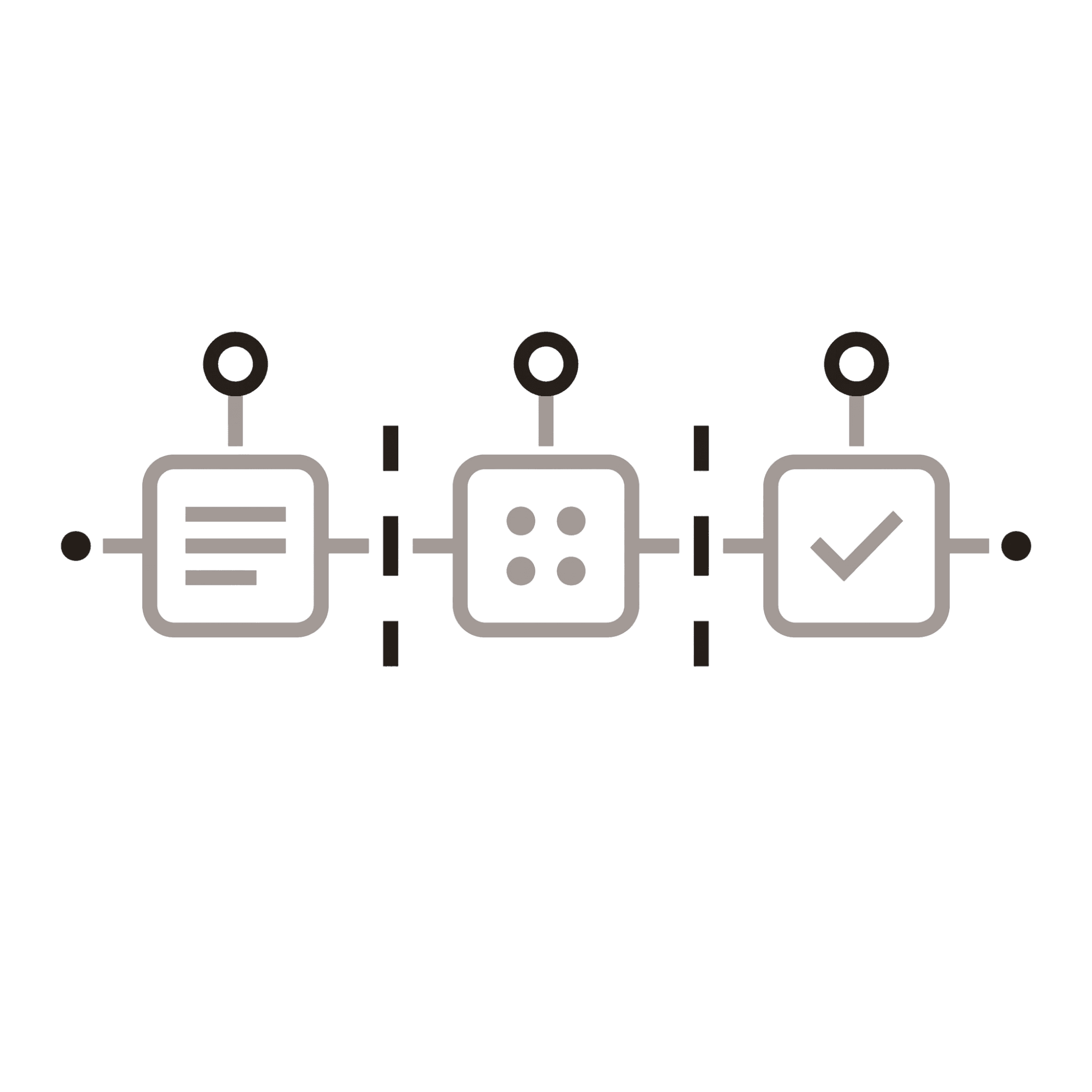
To understand the power of orchestration, consider the process of assembling a complex management report or a set of annual accounts. A robust multi-agent architecture breaks this down into distinct, auditable steps.
Step 1: The data agent
Before any text is written, a specialised data agent - or preferably, a purely deterministic software script - crunches the numbers, calculates the financial ratios and assembles the quantitative tables. This ensures the foundational mathematics are perfectly accurate.
Step 2: The narrative agent
Once the tables are locked, the narrative agent takes over. It reads the computed financial tables and drafts the qualitative explanations, identifying trends and generating the required boilerplate text. Because it does not have to perform any calculations, it can dedicate all its processing power to writing high-quality professional prose.
Step 3: The quality assurance agent
Finally, the quality assurance agent receives both the tables and the drafted narrative. Its instructions are strict: it must cross-check every single number mentioned in the text against the original tables. If the narrative agent hallucinated a figure that does not exist in the data, the quality assurance agent flags it for the human professional to review.
The primary benefit of this workflow is auditability. If an error is caught, the professional knows exactly which agent failed, allowing the firm to refine the specific instructions for that micro-task without breaking the rest of the workflow.
6. Conclusion
The integration of AI into financial services is no longer about finding the smartest single model. It is about building the most reliable digital infrastructure.
Trust in automated reporting requires rigorous governance. By moving away from monolithic chatbots and embracing multi-agent systems, accounting and audit firms can replicate their existing, proven quality control frameworks within the digital workforce. The future of professional AI is not a single, all-knowing brain - it is a highly structured, well-orchestrated firm.